
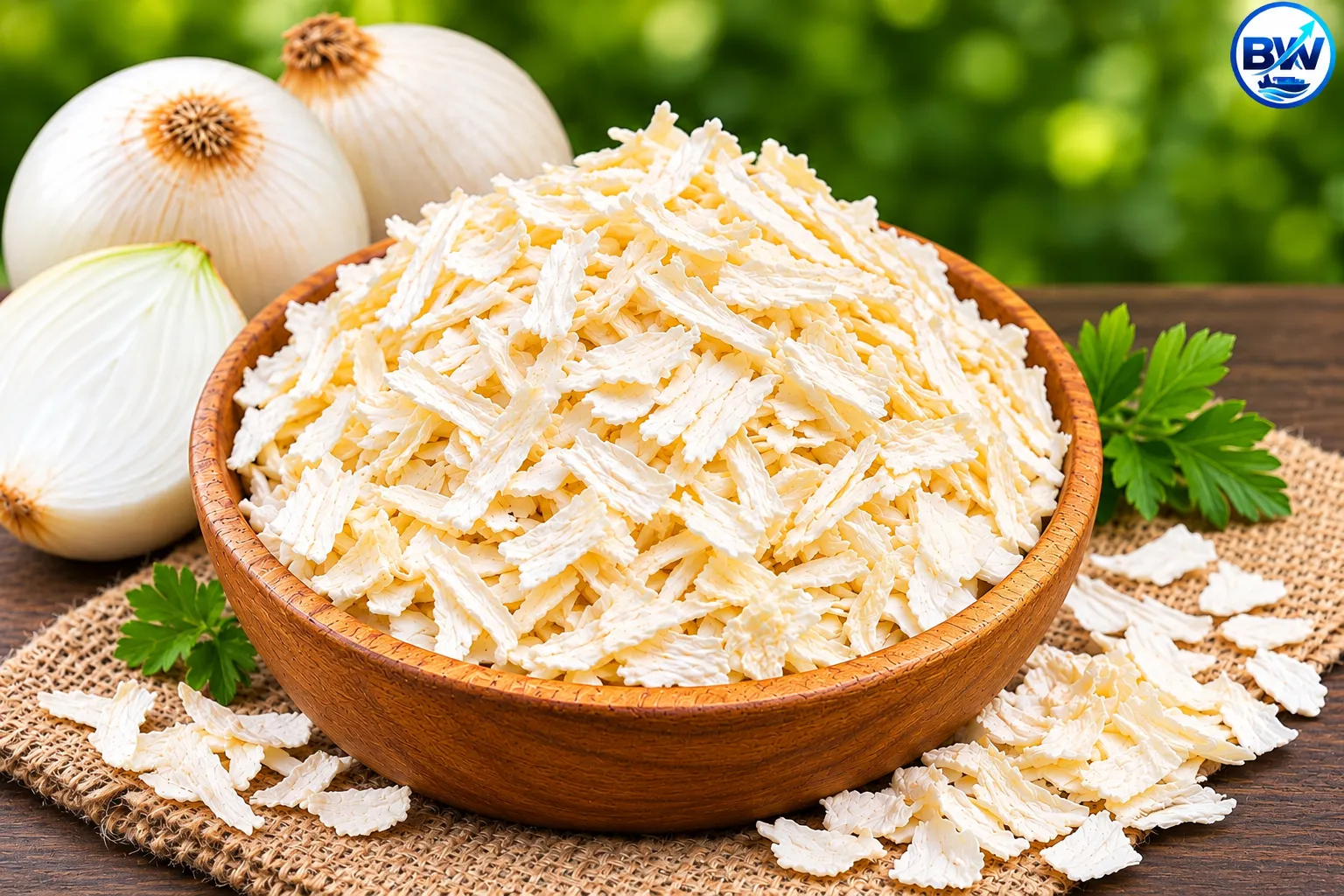
Onion flakes and onion powder start from the same raw material. The difference is the final cut, and that one decision affects how the ingredient performs in your product and what it costs to ship.
What is the difference?
Our white onion flakes are large 8–11 mm pieces, while white onion powder is milled to 80–100 mesh. Flakes keep a visible onion piece after rehydration. Powder dissolves instantly and spreads flavour evenly, leaving no visible onion in the finished product.
When to choose flakes
- Soups, sauces and ready meals where buyers expect to see onion pieces
- Recipes with enough liquid and cooking time to rehydrate the pieces
- Products sold on a traditional, home-style appearance
When to choose powder
- Seasoning and masala blends that need an even mix
- Snack, chip and namkeen coatings
- Gravies, ketchups and instant mixes that need a smooth texture
How the choice affects your freight cost
Cut size changes how much product fits in a container. A 20′ FCL carries roughly 8–10 MT of flakes but about 16–18 MT of powder. When you compare offers, work out your landed cost per kilogram and not just the ex-works price.
Start with what the customer should see in the finished product. If they should see onion, buy flakes. If they should only taste it, buy powder.
Not sure which suits your recipe? Our export desk can share specifications for each cut so you can trial them in your own process.